
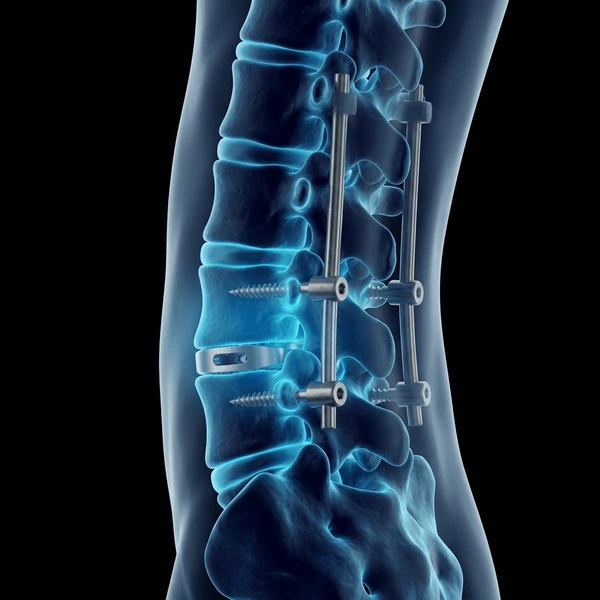
What is Percutaneous Stenoscopic Lumbar Decompression?
Percutaneous Stenoscopic Lumbar Decompression is a minimally invasive spine procedure used to treat lumbar spinal stenosis and nerve compression in the lower back. The procedure is performed through a small skin incision using a specialized stenoscope to relieve pressure on the spinal nerves.
Compared to traditional open spine surgery, this advanced technique involves less tissue damage, minimal blood loss, smaller incisions, faster recovery, and improved patient comfort.
At Axis Clinics, Percutaneous Stenoscopic Lumbar Decompression is performed using advanced image-guided minimally invasive spine techniques for safe and effective pain relief.
What Conditions Can Be Treated With Percutaneous Stenoscopic Lumbar Decompression?
Percutaneous Stenoscopic Lumbar Decompression is primarily used for spinal stenosis in the lumbar region, but as discussed above, there are some other complications related to the spine for which Percutaneous Stenoscopic Lumbar Decompression can be used. Here are the common conditions that can be treated with Percutaneous Stenoscopic Lumbar Decompression:
Lumbar Spinal Stenosis
The narrowing of the spinal canal for various reasons is known as Spinal stenosis. When it occurs in the lumbar region, the term lumbar spinal stenosis is used. With Percutaneous Stenoscopic Lumbar Decompression, the narrowed canal is made broader, and compression is released from nerves.
Herniated Disc
Sometimes, disc herniation causes the problem of spinal stenosis as the bugled material of the disc decreases the space in the spinal cavity. In such cases, Percutaneous Stenoscopic Lumbar Decompression is an effective surgery.
Foraminal Stenosis
It is also a narrowing problem in the spine, which occurs at the end of the spine, where the nerves leave. Percutaneous Stenoscopic Lumbar Decompression helps to widen the cavity in case of foraminal stenosis.
Degenerative Disc Disease
Sometimes, age-related degeneration causes the problems mentioned above. Hence, Percutaneous Stenoscopic Lumbar Decompression may be used.
How Does Percutaneous Stenoscopic Lumbar Decompression Work?
The procedure is performed through a small skin incision using a specialized stenoscope guided to the affected area under imaging support. The stenoscope provides a clear view of the compressed nerves, allowing the surgeon to remove the tissue or structures causing pressure on the nerves.
Once the nerves are decompressed, the instruments are removed and the small incision is closed, resulting in minimal tissue damage, less pain, and faster recovery compared to traditional surgery.
Benefits of Percutaneous Stenoscopic Lumbar Decompression?
The benefits of Percutaneous Stenoscopic Lumbar Decompression range from being minimally invasive to taking less time to recover. Here are some of the benefits of Percutaneous Stenoscopic Lumbar Decompression which make it better than traditional surgery:
- Minimal Risk Involved
- Faster Recovery
- Instant Relief
At Axis Clinics, Percutaneous Stenoscopic Lumbar Decompression is performed using advanced minimally invasive and image-guided spine techniques for precise nerve decompression, reduced recovery time, and improved patient comfort.
Don't let your pain hold you back.
Break free from pain and all the exceptions you are living with. Let Axis Clinics, the best pain management clinic, help you move freely again.