
Author
Dr Madhujeet Gupta [ MBBS,DA, FIPP (USA), FIPM (Germany)
Fellow of Endoscopic Spine Foundation of India
A good candidate for spine endoscopy is someone with clear nerve-related leg pain, MRI findings that precisely match symptoms, and persistent functional limitation despite appropriate conservative treatment. Patients with mechanical back pain alone, spinal instability, widespread disease, or psycho-social pain drivers usually do not benefit.
It is equally important to note that many patients who seek “minimally invasive” spine surgery are NOT good candidates. Recognizing this early prevents unnecessary procedures and poor outcomes.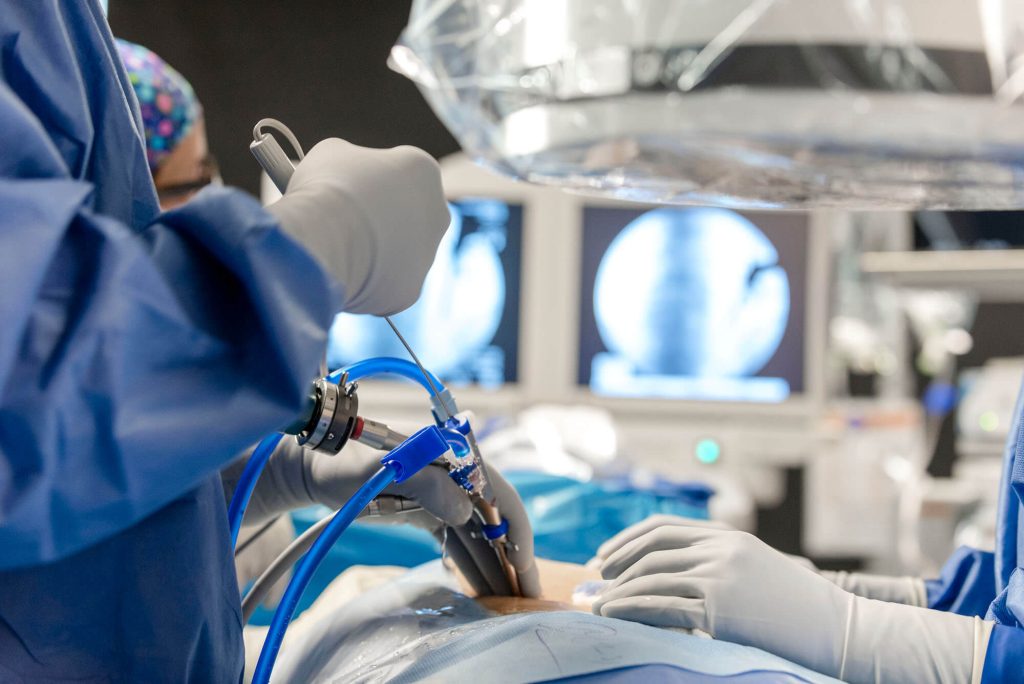
Over the years, I have seen that the success of endoscopic spine surgery depends far more on who we operate on than how we operate.
Why patient selection matters more than the size of the incision
Endoscopic spine surgery is often marketed as “minimally invasive,” and from a technical standpoint, that description is accurate. The incision is small, muscle damage is limited, and recovery is generally faster than with open surgery. But clinically speaking, minimal invasive is not universally suitable.
One of the most common reasons patients remain dissatisfied after spine surgery, endoscopic or otherwise, is incorrect patient selection, not surgical error. A perfectly performed surgery on the wrong indication will still fail.
In everyday practice, spine pain may originate from:
- nerve compression,
- discs,
- facet joints,
- muscles and ligaments,
- spinal instability,
- posture and biomechanics,
- or pain sensitization within the nervous system.
On the other hand, endoscopic spine surgery is designed to solve one specific problem: mechanical compression of a nerve. This means if mechanical compression of a nerve is not the dominant pain generator, surgery will not deliver meaningful benefit.
How Endoscopic spine surgery actually works
Endoscopic spine surgery allows the surgeon to reach the spine through a very small corridor, using a camera and specialized instruments, to remove the precise structure compressing a nerve, which is usually a disc fragment, a thickened ligament, or a bony overgrowth.
Here’s what it does well:
- Direct nerve decompression
- Preservation of muscle and stabilizing structures
- Faster mobilization and recovery
And, here’s what an endoscopic spine surgery does NOT do:
- Reverse degeneration
- Correct spinal instability
- Fix posture-related pain
- Address widespread or multi-level disease
- “Reset” a sensitized nervous system
Understanding this boundary is central to deciding whether some one is a good candidate for endoscopic spine surgery or not.
The core clinical criteria we use to identify good candidates at Axis Clinics
Over time, our approach to patient selection has become increasingly conservative, not more aggressive. This means that we only recommend endoscopic spine surgeries to patients who really need it and are good candidates for it. Typically, the strongest candidates for spine endoscopy consistently meet three essential criteria.
1. A clearly identifiable pain generator
The pain must follow a recognizable nerve pattern. Most often it radiates down the leg rather than remaining confined to the lower back. Vague, shifting, or purely axial back pain rarely responds to decompression alone.
2. Strong correlation between symptoms and imaging
This means that MRI findings must match the clinical picture. A disc bulge on MRI is not enough. It must be compressing the same nerve that explains the patient’s symptoms. Incidental MRI findings are common and are a major source of over-treatment when not interpreted carefully.
3. Failure of appropriate conservative treatment
Most good candidates have already tried structured physiotherapy, activity modification, medications, and sometimes even targeted injections, without achieving sustained functional improvement. If these methods provide respite to a patient, there is no need for endoscopic spine surgery.
Our approach is centred around our experiential learning that conservative care is not a formality. Instead, it helps confirm whether pain is structural and surgically correctable.
Conditions that respond best to endoscopic spine surgery
Now you know why some patients are more suited for endoscopic spine surgery, while others are not. Some of that conditions that respond well to endoscopic spine surgery are:
- Lumbar disc herniation
Condition where patients experience worse leg pain than back pain, the pain follows a clear nerve-root distribution, MRI shows disc herniation compressing the same nerve, and symptoms persist beyond 6–8 weeks despite conservative care. In such cases, removing the offending disc fragment often leads to rapid improvement in leg pain because the nerve pressure is immediately relieved.
- Foraminal or lateral recess stenosis
Condition where the nerve compression occurs at the exit zone rather than the central canal, endoscopic decompression can be particularly effective. Typically these symptoms are one-sided, pain worsens with standing or walking, and imaging shows focal narrowing without instability. In such patience’s, the endoscopic precision is advantageous.
- Recurrent disc herniation after previous surgery
It is a condition where selected patients can benefit from endoscopic techniques as a safer alternative to repeat open surgery. They are able to avoid scar-heavy tissue planes, muscle trauma, and experience faster recovery. That said, revision cases demand higher surgical expertise and careful counselling. Not every recurrence is suitable for endoscopy.
- Selected cases of single-level degenerative disc disease with radiculopathy
This is also a situation where a patient maybe a good candidate for endoscopic spine surgery. Specially, for patients who show dominant nerve pain without instability and only mild to moderate disc collapse. Endoscopic decompression in such cases may relieve symptoms without the need for fusion. However, these cases require particularly cautious decision-making.
Patient factors that strongly influence outcomes
Beyond anatomy, outcomes are also shaped by patient behaviour, expectations, and psychological readiness. Patients who tend to do the best are engaged, informed, sincere with post-op followups, committed to rehabilitation and realistic about recovery timelines.
However, outcomes are poorer when fear-avoidance, catastrophising, or untreated depression dominate the pain experience. Surgery alone cannot correct nervous system sensitization.
When is endoscopic spine surgery not the right choice
Just like it’s important to know when endoscopic spine surgery will give the right results, it’s equally obligatory to be clear about limitations. For example, spinal endoscopy doesn’t do much for the patient, in cases of:
- Mechanical back pain without nerve compression,
- Diffused pain across the lower back, worsened by prolonged sitting or standing, and not radiating down the leg,
- Spinal instability or high-grade spondylolisthesis,
- Advanced multi-level central spinal stenosis,
- Severe spinal deformities which involve global alignment issues, like scoliosis, kyphosis, or major disc height collapse,
- Significant psychosocial pain drivers.
Why is MRI not enough
When determining the suitability of a patient to endoscopic spine surgery, MRI is essential, but it does not make decisions on its own. Assessment also requires:
- Clinical correlation with symptoms
- Exclusion of incidental findings,
- Evaluation of spinal stability,
- Review of prior imaging and progression.
Over-reliance on MRI without clinical judgment is one of the most common causes of unnecessary surgery.
Questions every patient should ask
At Axis clinics, we believe that every patient has the right to information about the procedure that they will undergo. Information is one of the key factors that helps patients become psychologically ready, and thus a good candidate. So, we encourage patients to ask questions like:
- What exact structure is causing my pain?
- How does endoscopic surgery address it?
- What happens if I delay surgery, or avoid it altogether?
- What non-surgical options remain?
- What outcome is realistic in my case?
Clear answers are a sign of ethical care.
Choosing the right endoscopic spine surgery specialist
Last, but not the least, endoscopic spine surgery can offer excellent relief, but only when used selectively and responsibly. In my experience, patients researching the best clinic for endoscopic spine surgery should focus on emphasizing on correct diagnosis, and in-depth patient education.
At Axis Clinics, we believe that patient appropriateness matters more than marketing promises like incision size; and helps us in delivering consistently stable long-term outcomes. Which is why, unlike some other centres, we do not focus purely on technique.
Instead, at Axis Clinics, our approach to endoscopic spine surgery is rooted in careful selection of appropriate patients, understanding their needs, in-depth counselling, and structured recovery.
At Glance
Who Is NOT a Good Candidate for Spine Endoscopy?
Patients are usually not good candidates if they have:
- Mechanical back pain without nerve compression
- Diffuse, non-radiating low back pain
- Spinal instability or high-grade spondylolisthesis
- Advanced multi-level central stenosis
- Major spinal deformity (scoliosis, kyphosis)
- Dominant psychosocial or sensitisation-driven pain